Last updated September 22, 2026
New windows and doors improve comfort, cut energy bills and add long-term value to your home. Sightline Windows & Doors Fort Lauderdale pairs proven product lines with our own installing crews for lasting performance - and a price we put in writing.
1. Choose your installer
The unit is half the job - the install is the other half. Our own background-checked crews measure, set, seal and insulate every opening, and they know the lines we quote inside and out because they install them every week.
2. Select the right products
Compare styles, materials and glass packages side by side until the fit is right for your rooms, your budget and your goals. The product-line comparison below is the place to start.
3. Prepare your home for install
Before install day we walk you through a short checklist - furniture pulled back, treatments down, a clear path to each opening - so install day is watch-it-happen, not scramble.
Compare the Lines We Quote
Every project is priced on the same lines, side by side - the price indicators below are relative, and your consultant shows exact numbers on your actual openings.
PGTThe line Florida homeowners arrive naming - the most Miami-Dade certifications in the industry$$$
- More Miami-Dade NOA certifications than any other line we quote
- WinGuard, EnergyVue and ClassicVue Max systems built for every wind zone
- 99% on-time delivery keeps your install date on the calendar
CGIThe heavyweight impact line$$$$$
- Large-missile impact ratings for the strictest wind zones
- Architectural-grade aluminum with commercial-depth frames
- The line we quote when protection is the whole point
CWSThe Florida value pick$$
- Vinyl systems built in Florida for Florida codes
- Strong energy packages at the friendliest price point
- The smart start for whole-home replacements on a budget
ESWSlim lines, big glass$$$$
- Narrow-sightline aluminum for modern elevations
- Oversized openings and floor-to-ceiling glass
- Impact-rated without the bunker look
ECOThe aluminum impact workhorse$$$
- Miami-built aluminum impact systems
- A strong price-to-protection ratio for coastal homes
- Proven inventory lines with short lead times
Window Installation Maintenance Checklist for Fort Lauderdale Homeowners
Every generic window maintenance checklist starts with the glass. In Fort Lauderdale, that’s backwards. Aluminum frame oxidation in coastal Broward begins at the sill corners, not the glazing seal - and by the time you notice fog between panes, the frame has already allowed water infiltration for 18 months. Salt air, humidity, and UV radiation here create a specific degradation sequence that northern checklists ignore completely. This guide covers the maintenance tasks that actually prevent failure on South Florida impact windows and doors, organized around what the climate does to your frames, hardware, and seals - not what looks good on a calendar reminder. For professional Window Installation services, our team ensures your systems are built to withstand these local conditions from day one.
Quick Answer
Fort Lauderdale homeowners should rinse salt residue from window frames every 90 days if within one mile of the Intracoastal or Atlantic, inspect and clear weep holes quarterly, test sealant elasticity at 3-year intervals (not 5), lubricate hardware with silicone-based products only, and document all maintenance with dated photos for insurance purposes. Skip glass-centric cleaning routines and annual caulk replacement - both waste time on properly installed impact windows.
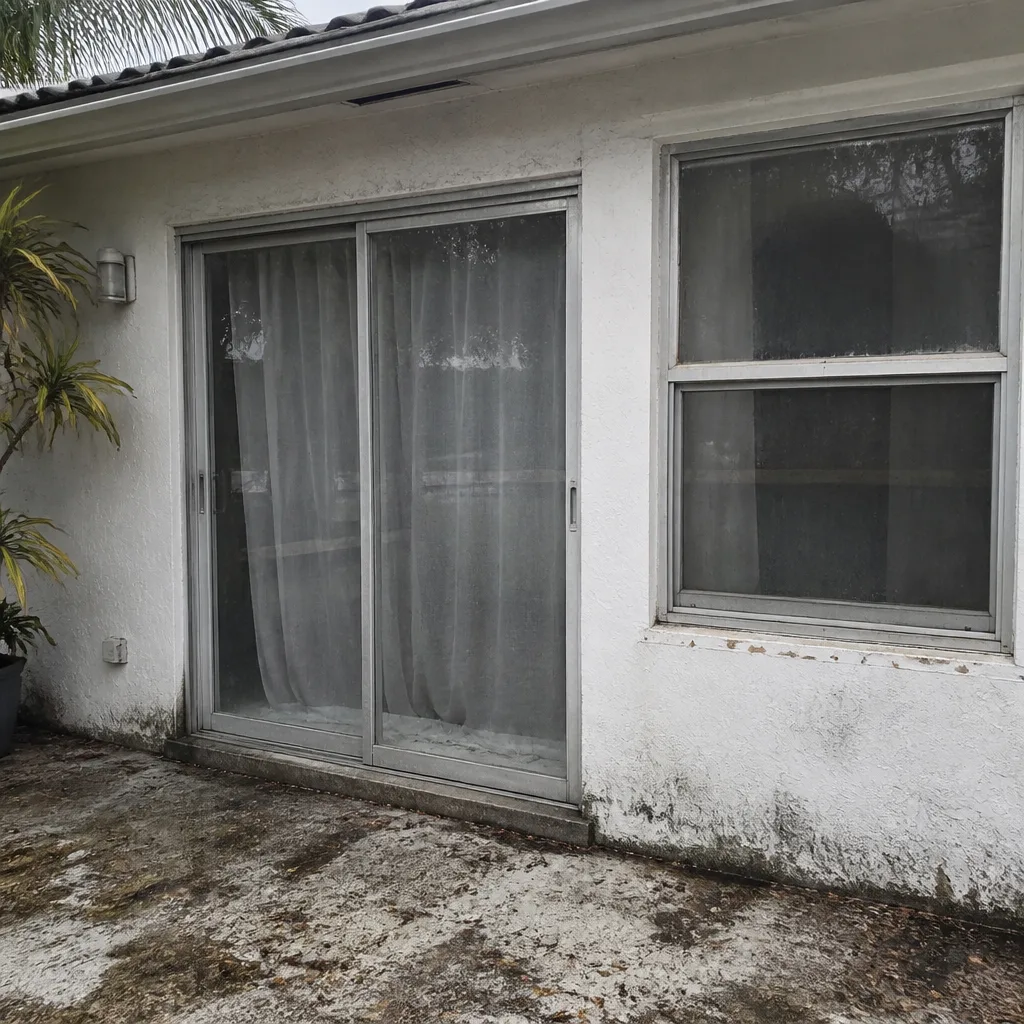 Before
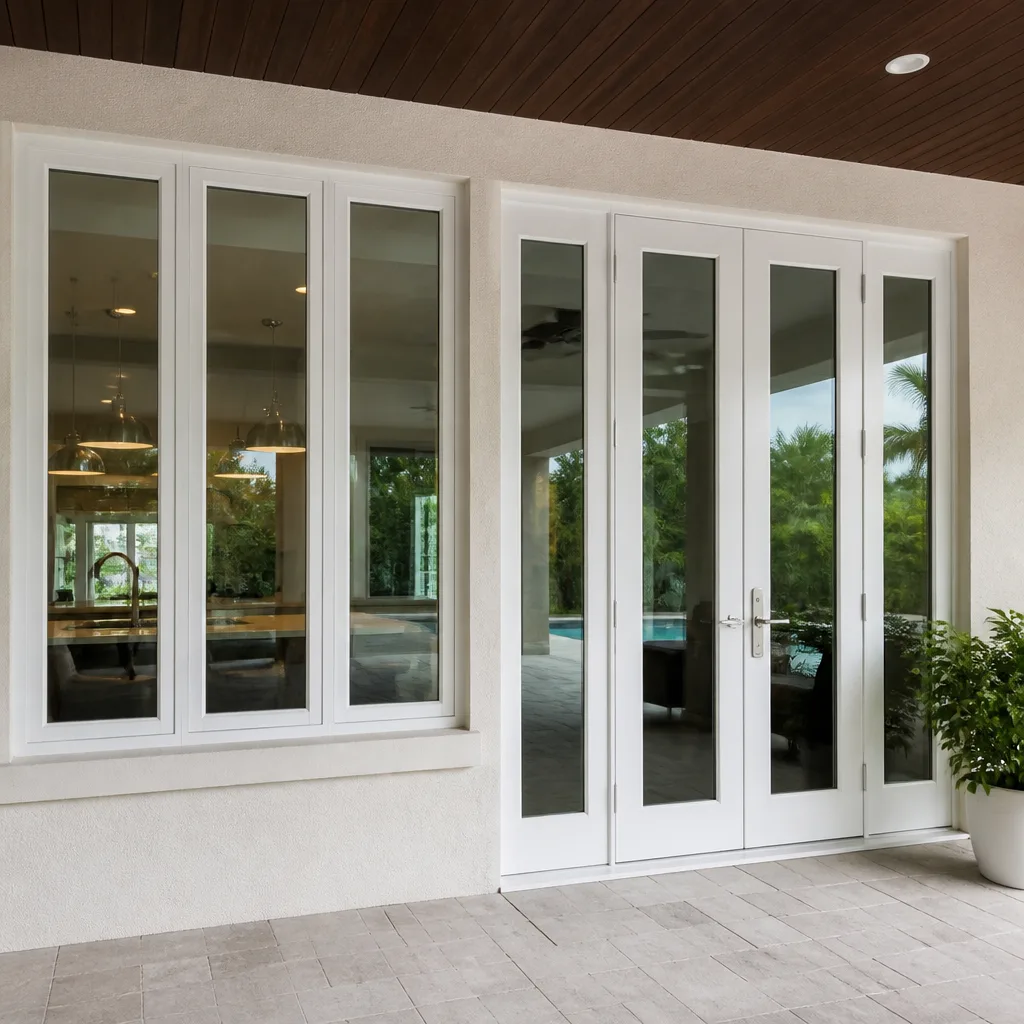 After
AfterTable of Contents
- Why the Fort Lauderdale Climate Destroys Windows Differently
- The 90-Day Salt-Air Rinse Protocol
- Weep Holes: The Most Neglected Maintenance Point
- Sealant Inspection Tied to UV, Not Calendar Year
- Hardware Lubrication: What Not to Use
- Documenting Your Maintenance for Insurance Adjusters
- Annual Inspection Checklist by Season
- Common Mistakes to Avoid
- When to Call a Professional
- Frequently Asked Questions
- The Bottom Line
Why the Fort Lauderdale Climate Destroys Windows Differently
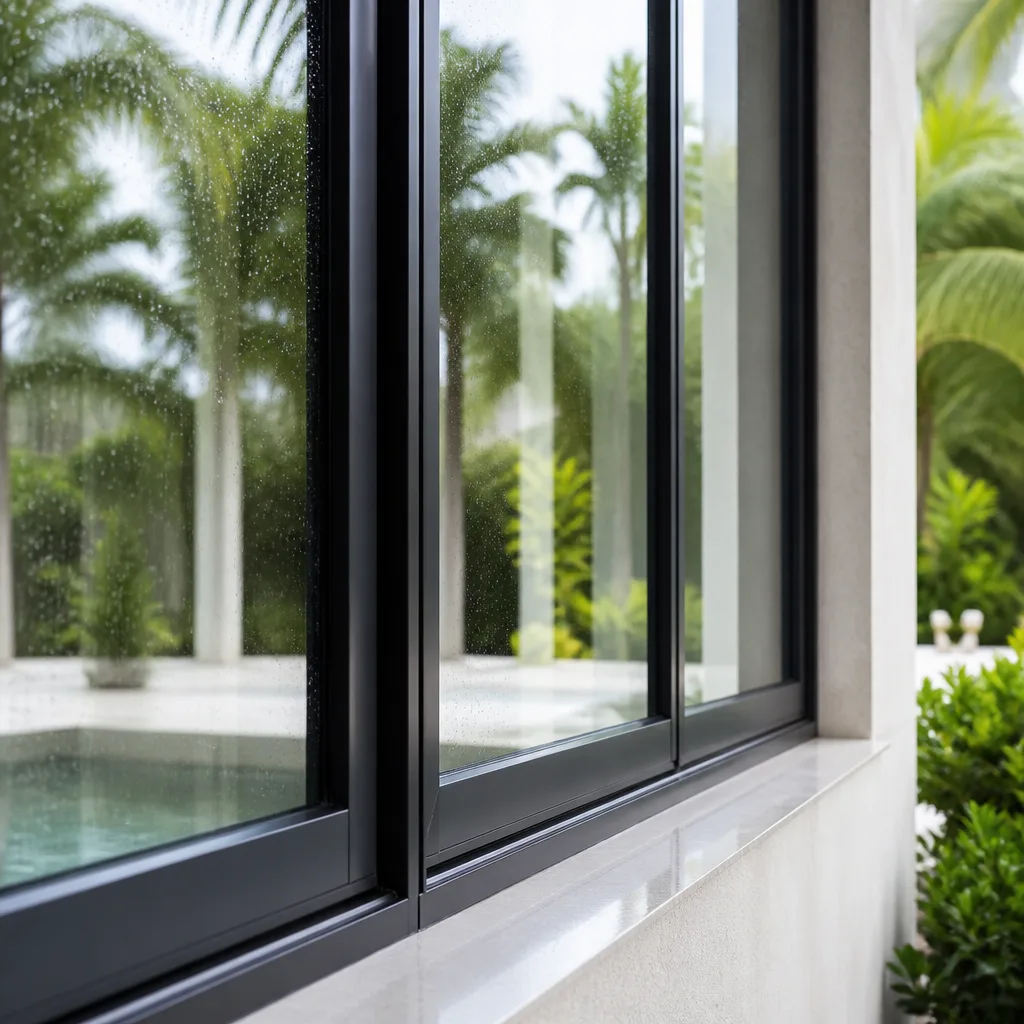
Impact windows in Fort Lauderdale face a three-front assault that doesn’t exist in Orlando, let alone Atlanta. Salt aerosol from the Atlantic and Intracoastal Waterway deposits chloride ions on aluminum frames continuously. Relative humidity hovers above 70% for eight months of the year, keeping those salts in solution and accelerating galvanic corrosion. UV radiation at this latitude breaks down organic sealants faster than manufacturers test for in continental climates.
The result is a predictable failure sequence we’ve documented across thousands of window installations in Fort Lauderdale:
- Frame oxidation at sill corners. Water pools where the sill meets the jamb, especially on east-facing elevations. Salt concentrate accelerates pitting in anodized aluminum.
- Weep hole blockage. Humidity plus airborne debris creates a paste that seals drainage channels. Water backs into the track, then the wall cavity.
- Sealant hardening. UV embrittles the primary seal between frame and wall. Cracks form, but water doesn’t enter immediately - the secondary seal holds for months, masking the problem.
- Hardware seizure. Corroded rollers and locks on impact sliding doors increase operating force, which warps sashes and compromises the interlock seal.
- Glass seal failure. Only after frame and sealant degradation does argon escape and condensation form between panes. This is the symptom homeowners notice first, but it’s the last failure in the chain.
Generic checklists reverse this priority. They tell you to clean glass and check for condensation, which catches failure at stage five. For more guides & resources tailored to South Florida’s unique climate challenges, explore our blog. A Fort Lauderdale-specific checklist attacks stages one through four.
The coastal exposure gradient matters. Properties in Harbor Beach, Las Olas Isles, or Coral Ridge - within a half-mile of open water - see frame oxidation rates roughly double those in Victoria Park or Rio Vista, which are buffered by distance and vegetation. Homes on the barrier island, from Fort Lauderdale Beach to Lauderdale-by-the-Sea, sit in the highest-deposition zone. The checklist below scales tasks to your actual exposure, not your ZIP code.
The 90-Day Salt-Air Rinse Protocol
Salt-air rinse is the single most effective maintenance task for coastal Fort Lauderdale properties, and it’s absent from every generic checklist we’ve reviewed. The protocol is simple, but the timing and method are specific.
Who Needs This
Every property within one mile of the Atlantic shoreline or the Intracoastal Waterway. In Fort Lauderdale, that includes essentially all of 33301, 33304, 33305, 33308, 33316, and portions of 33306 and 33315. If you can smell the ocean from your driveway, you’re in the zone.
The Rinse Procedure
- Use fresh water only. No detergents, no vinegar solutions, no “marine-grade” cleaners. Detergents leave surfactant residue that attracts moisture. We’ve seen frames at a Harbor Beach installation develop pitting accelerated by a homeowner’s monthly Dawn-and-water routine.
- Rinse from top to bottom. Start at the head jamb and work down. This prevents dirty water from drying on lower surfaces you’ve already cleaned.
- Pay attention to sill corners and track recesses. These are the lowest points where salt concentrate accumulates. Use a soft brush to dislodge buildup, then flush with water.
- Dry with a clean microfiber cloth. Air-drying leaves evaporative salt deposits. In humid Fort Lauderdale conditions, that takes hours - long enough for corrosion to initiate.
- Frequency: every 90 days minimum. Quarterly rinses reduce chloride buildup below the threshold where pitting accelerates. Monthly is better for direct oceanfront. After named storms, rinse within 72 hours regardless of schedule - storm surge aerosol carries higher salt loads than normal sea breeze.
What not to do: pressure washing. The high-pressure stream can force water past weatherstripping into the frame cavity, and it can damage the finish on Sightline Windows & Doors Fort Lauderdale home installations using PGT or CGI anodized frames. We’ve documented finish stripping at 1,200 PSI and above.
The 90-day interval comes from our field observations, not a manufacturer spec. At 120 days, we consistently find visible salt crystallization in track corners. At 60 days, the maintenance burden exceeds the corrosion benefit. Ninety days is the practical optimum for Fort Lauderdale’s deposition rate.
Weep Holes: The Most Neglected Maintenance Point
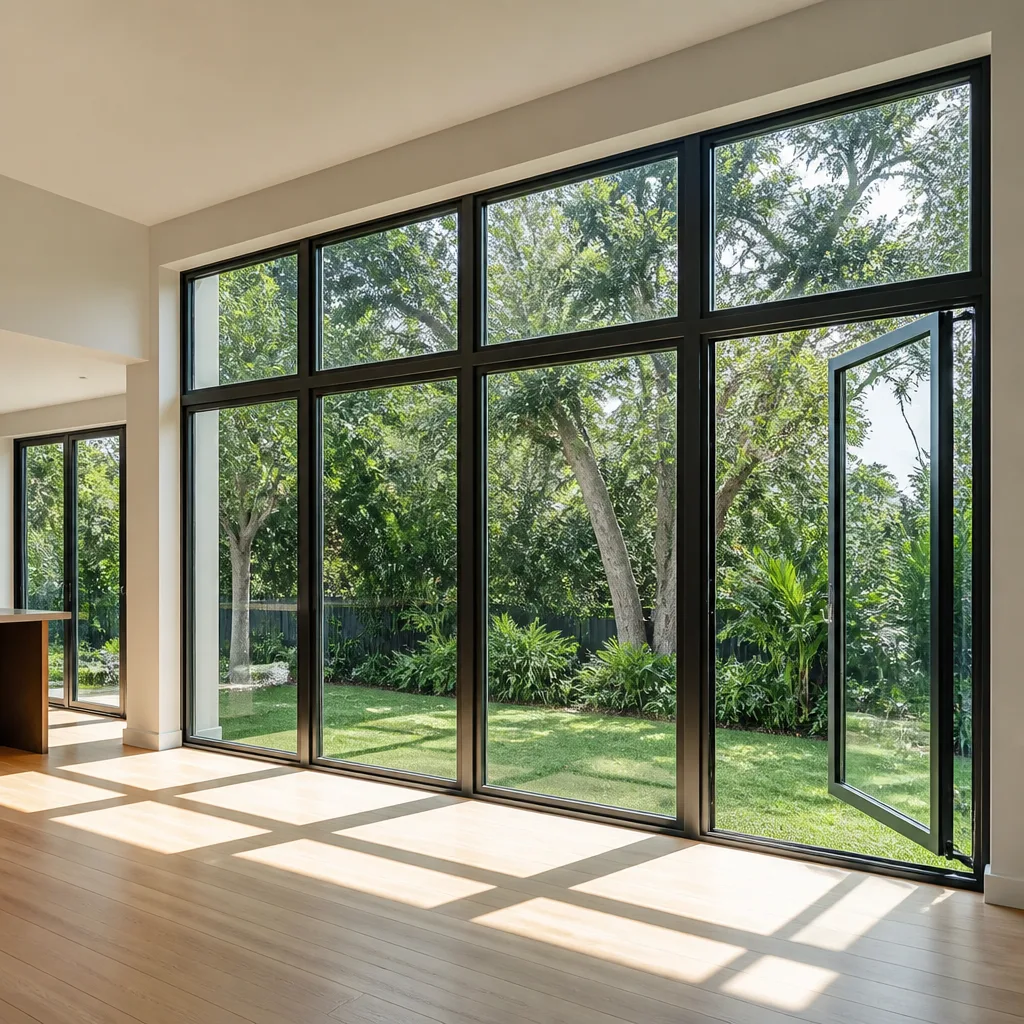
Impact sliding doors in Fort Lauderdale fail from water intrusion more often than from wind pressure or impact damage. The cause is almost always blocked weep holes - the small drainage openings in the door sill that allow track water to escape to the exterior.
In humid climates, weep holes become blocked by a specific mechanism: airborne organic matter (pollen, leaf fragments, insect debris) mixes with condensation in the track, forming a paste that dries into a plug. A single blocked weep hole on a 6-foot sliding door can allow water to rise above the interior track seal during a typical Fort Lauderdale afternoon thunderstorm.
Inspection Procedure
- Locate all weep holes. On most impact sliding doors, including CWS and ES Windows products we install, weep holes are on the exterior face of the sill, spaced 12 to 18 inches apart. Some sills have secondary weeps on the ends.
- Probe with a thin wire or weep hole tool. Do not use compressed air - it can drive debris deeper into the drainage channel. A straightened paperclip works; purpose-made weep hole cleaners are better.
- Flush with water. Pour a cup of water into the track. It should exit the weep holes within 30 seconds. If it pools, the channel is blocked internally.
- Check the exterior drainage path. Weep holes must discharge to open air, not against landscaping mulch or a concrete paver that creates a back-splash. We’ve seen “mystery” water damage in Rio Vista homes where the weep functioned perfectly but discharged against a planter wall.
Frequency: quarterly in Fort Lauderdale, monthly during pollen season (March through May), and immediately after any storm that deposits debris.
A specific note on impact door sills: the interlock design that provides wind and impact resistance creates more corners and recesses where debris collects than a standard sliding door. This is a necessary trade-off for the protection rating, but it increases maintenance burden. We always point this out during door installation in Fort Lauderdale - the homeowner who understands why the track is more complex is more likely to maintain it.
Sealant Inspection Tied to UV, Not Calendar Year
Every generic checklist says “inspect caulk annually” or “recaulk every 5 years.” That timeline works in Cleveland. In Fort Lauderdale, UV radiation at 26 degrees north latitude degrades sealant elasticity faster than calendar time predicts.
We specify a 3-year retest interval for sealant on Fort Lauderdale installations, with annual visual checks. The retest is a physical probe, not a glance from the driveway.
The Sealant Elasticity Test
- Choose a test point at each cardinal exposure. South and west faces degrade fastest; north slowest. Test all four to catch localized failure.
- Press the sealant bead with a blunt tool. A wooden popsicle stick works. Properly elastic sealant deforms and recovers. Failed sealant cracks, crumbles, or remains indented.
- Check adhesion. Gently attempt to lift the sealant edge where it meets the frame. If it separates cleanly, adhesion has failed even if the bulk material looks intact.
- Document with photos. Date-stamped images of test points create a degradation timeline. This matters for insurance claims - more on that below.
Fort Lauderdale’s UV index exceeds 10 for roughly 120 days annually. At that intensity, acrylic and silicone-modified sealants lose 30-40% of their original elongation within 36 months. Pure silicone formulations, including those we specify for coastal applications, last longer but cost more. The 3-year retest catches degradation before cracks propagate to the secondary seal.
Where to focus: the head jamb-to-wall interface on upper floors, where thermal cycling is most extreme; the sill-to-wall interface on all floors, where water exposure is highest; and any sealant joint that was field-applied rather than factory-finished. Factory-applied seals on products from ECO Window Systems and Mr-Glass typically outlast field-applied backup sealant.
Do not apply new sealant over old. That’s the most common DIY error we correct. Old sealant must be removed, the joint cleaned and primed if specified by the new sealant manufacturer, then reapplied to full depth. A skin of new sealant over crumbling old material fails within one season.
Hardware Lubrication: What Not to Use
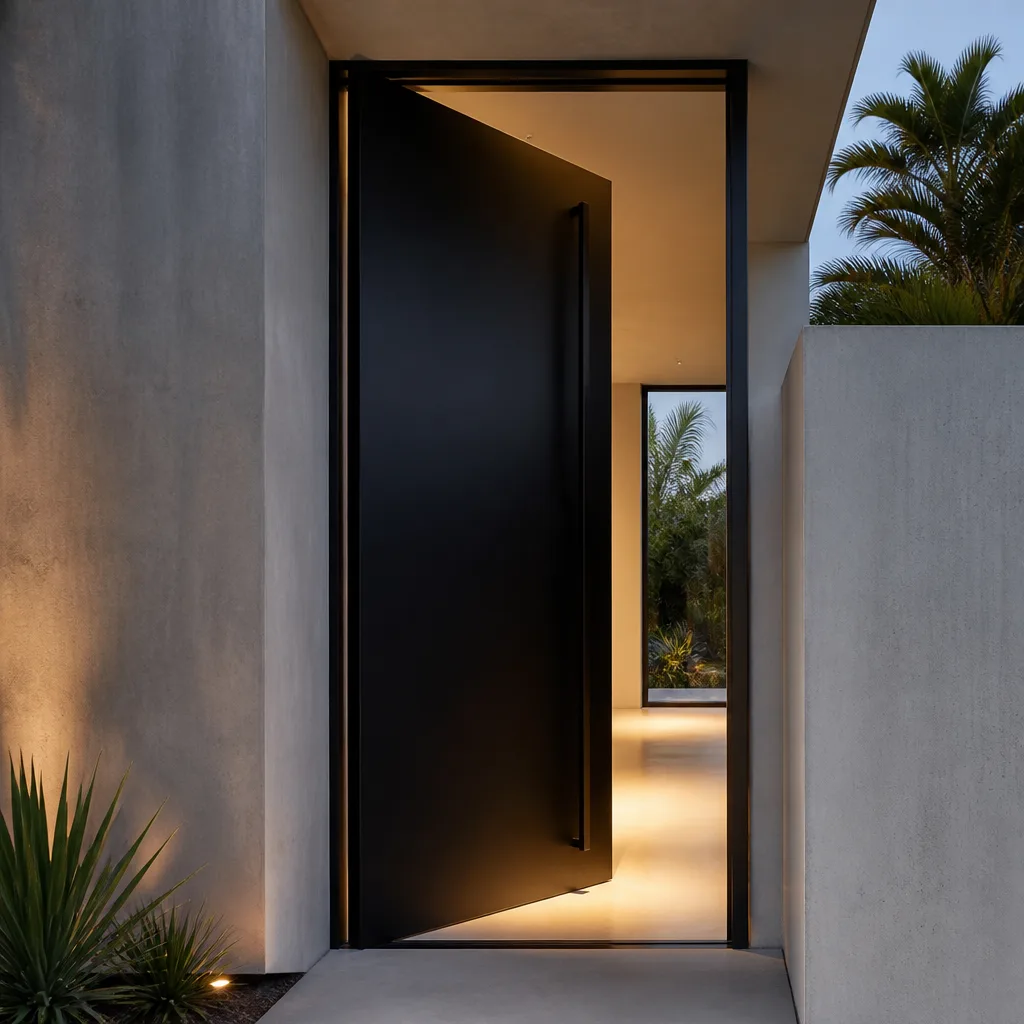
Lock mechanisms, rollers, and hinges on Fort Lauderdale windows and doors require lubrication, but the wrong product accelerates corrosion faster than no lubrication at all.
The critical rule: never use petroleum-based lubricants on aluminum hardware in salt-air environments. WD-40, 3-in-1 oil, and similar products leave a hydrocarbon film that attracts and retains salt-laden moisture. We’ve replaced rollers at a Las Olas Isles installation where the homeowner’s annual WD-40 routine had turned the axle into a corrosion cell - the lubricant was the accelerant.
Approved Products and Application
- Silicone spray lubricant. Dry-film silicone leaves no petroleum residue. Apply to rollers, hinges, and lock bolts. Wipe excess - pooled lubricant collects debris.
- White lithium grease (sparingly). Acceptable for steel components only, such as certain hinge pins. Never on aluminum-to-aluminum contact surfaces.
- Graphite powder. Best for lock cylinders, where liquid lubricants can attract grit. Apply with a puffer, then operate the key several times to distribute.
Application frequency: annually for most Fort Lauderdale properties, semi-annually for oceanfront. The signal to lubricate is increased operating force - a sliding door that required 5 pounds of force to open and now needs 15 is telling you something. Waiting until hardware seizes risks warping the sash and compromising the interlock seal.
Specific guidance for impact sliding door rollers: these carry more weight than standard rollers and run in tracks with tighter tolerances. When lubricating, move the door fully open and fully closed several times to distribute the lubricant across the roller circumference. Check for flat spots on rollers - a flat spot indicates bearing failure, and no amount of lubrication will correct it. Replace the roller assembly.
Documenting Your Maintenance for Insurance Adjusters
After a named storm, insurance adjusters in Florida increasingly deny window and door damage claims where maintenance records are absent. The adjuster’s position: the damage was pre-existing neglect, not storm-caused. A documented maintenance record is your rebuttal.
The documentation standard we recommend is simple but specific:
- Date-stamped photos of each maintenance task. Not just “window maintenance” but “weep holes cleared, east elevation sliding door, water drained in 8 seconds.” The specificity matters.
- Written log with product details. “Rinsed frames with fresh water, dried with microfiber, 90-day protocol.” “Tested sealant elasticity at south elevation test point - full recovery, no adhesion loss.”
- Receipts for professional service. If you hire maintenance, keep itemized invoices. If you DIY, keep purchase receipts for lubricants and tools - they establish the maintenance occurred.
- Pre-storm condition documentation. Before hurricane season, photograph each opening from interior and exterior. After a storm, the “before” images prove the condition baseline.
Store records in cloud backup, not solely on a phone that can be lost or damaged. Email them to yourself with descriptive subject lines: “2025 Q2 window maintenance, 1234 Coral Ridge Drive.”
The Haven Standard’s documented photo record on every Sightline installation gives our customers a head start - we provide the “before” documentation at completion. But ongoing maintenance records are the homeowner’s responsibility, and they matter more every year as Florida insurers tighten claim scrutiny.
We’ve reviewed competitor installations where the homeowner had no records and the adjuster attributed frame corrosion to “long-term salt-air exposure” rather than Hurricane Irma’s wind-driven rain. The claim was denied. Don’t let that be your situation.
Annual Inspection Checklist by Season

Fort Lauderdale’s climate doesn’t follow four equal seasons, but certain maintenance tasks align with predictable annual patterns. This checklist organizes work by when conditions make it most effective - or most necessary.
March-May (Dry Season, Peak Pollen)
- Increase weep hole inspection frequency to monthly - pollen plus early humidity creates the worst blockage conditions
- Perform full 90-day salt rinse at season start; pollen season deposits compound salt residue
- Inspect screens for tears before insect pressure increases; repair or replace
- Test all locks and latches for smooth operation; lubricate before summer humidity peaks
June-November (Hurricane Season, Peak Humidity)
- Complete pre-season photo documentation of all openings by May 31
- Verify impact-rated product labels are legible - adjusters and code inspectors must read them
- Confirm weep holes are fully functional before peak thunderstorm frequency
- Post-storm: inspect for visible frame damage, sealant displacement, or water staining within 48 hours; rinse salt residue within 72 hours
December-February (Cooler, Lower Humidity)
- Perform annual sealant visual inspection - cooler temperatures make sealant most elastic, revealing true condition
- Deep-clean tracks and sills with brush and fresh water; dry thoroughly in lower humidity
- Lubricate all hardware before spring operating season
- Schedule professional inspection if any 3-year sealant retest is due
This seasonal framing replaces the arbitrary “spring cleaning” and “fall prep” of northern checklists with Fort Lauderdale’s actual climatic drivers. The pollen-humidity interaction in late spring, the thunderstorm cycle of summer, and the relative dryness of winter are the real scheduling constraints.
Common Mistakes to Avoid
- Cleaning glass with ammonia-based products on Low-E coatings. Many Fort Lauderdale homeowners upgraded to energy-efficient windows with Low-E glass. Ammonia degrades the coating edge, creating a visible line that expands inward. Use vinegar or manufacturer-specified cleaner only.
- Pressure washing frames and tracks. The force drives water past weatherstripping and can strip anodized finishes. We’ve replaced sills at a Victoria Park home where annual pressure washing had eroded the finish to bare aluminum in three years.
- Applying car wax to aluminum frames. Some online guides recommend this for “protection.” Automotive waxes contain abrasives and solvents that damage anodized finishes. They also attract dust and salt in coastal air.
- Ignoring the interior side of impact windows. Condensation on the interior surface in air-conditioned homes indicates humidity control failure, not window failure. But persistent interior condensation at the frame edge signals sealant breach - a different problem requiring different action.
- Replacing sealant on a 5-year calendar cycle without testing. In Fort Lauderdale’s UV environment, sealant may fail at 2.5 years or last 4.5. Testing determines need; calendar does not.
- Using steel wool or abrasive pads on aluminum frames. This removes the protective anodized layer and initiates galvanic corrosion. Even “fine” steel wool causes microscopic scratches that become corrosion nuclei.
- Assuming impact windows are “maintenance-free.” The impact rating addresses wind and debris resistance, not corrosion immunity. The laminated glass and reinforced frames actually create more maintenance points - heavier sashes, tighter tolerances, more complex drainage - than standard windows.
When to Call a Professional
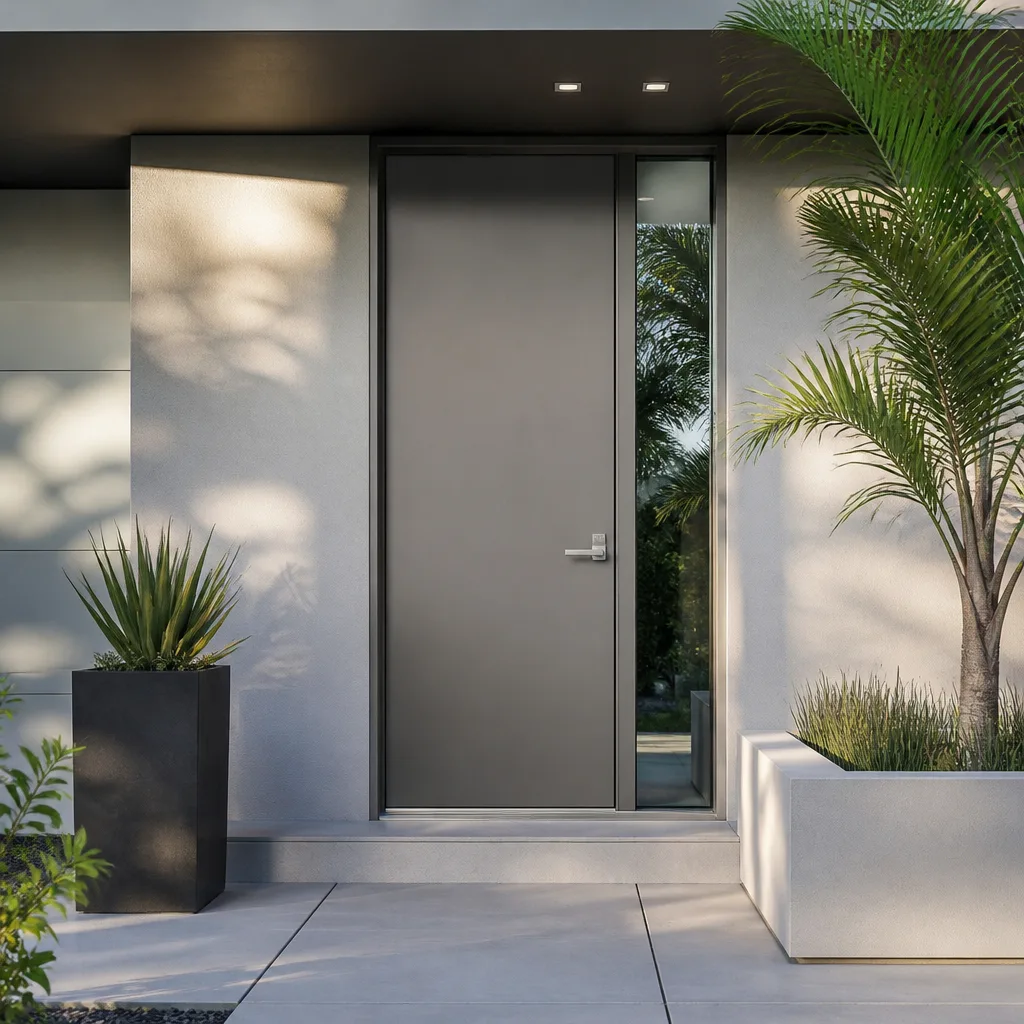
Some maintenance indicators require trained assessment. Call for professional inspection if you find: frame pitting deeper than surface discoloration; sealant cracks that extend through the full bead thickness; water staining on interior drywall below window or door openings; increased operating force that lubrication doesn’t resolve; or any glass unit showing condensation between panes. Before any work begins, consult our guide on Windows & Doors Permits, Codes & Inspections in FL: What You Need to Know.
Impact window and door systems are engineered assemblies - field repairs to frames, glass, or hardware by unqualified persons can void warranties and compromise the impact rating that your insurance and building code compliance depend on.
Sightline Windows & Doors Fort Lauderdale offers free estimates in Fort Lauderdale - call (754) 666-7478. Every assessment includes a measured survey you keep, a written scope with fixed pricing, and documentation under the Haven Standard. We also provide free second opinions on any written estimate from another contractor.
Frequently Asked Questions
Glass cleaning frequency is aesthetic preference, but frame rinsing for salt-air removal should occur every 90 days for properties within one mile of coastal water, monthly for direct oceanfront. Inland Fort Lauderdale properties beyond a mile can extend to 120 days. Call (754) 666-7478 if you’re unsure which zone your property falls into - we’ll confirm by address.
Neglecting weep holes on impact sliding doors. Homeowners focus on glass cleanliness and miss the drainage channels that prevent water infiltration. A single blocked weep hole can cause thousands in interior water damage during a typical summer thunderstorm. Quarterly inspection takes five minutes; water damage repair takes days.
Quality silicone sealant properly applied typically maintains elasticity for 3 to 4 years in Fort Lauderdale’s UV environment, not the 5 to 7 years common in northern climates. We specify a 3-year retest interval - earlier if the south or west elevation shows visible surface checking. Replacement is only needed when the elasticity test fails, not on a fixed schedule.
No. WD-40 is a petroleum-based product that attracts and retains salt-laden moisture on aluminum hardware, accelerating corrosion. Use dry-film silicone spray instead. If hardware is already stiff from corrosion, replacement is usually necessary - lubricant won’t reverse pitting or galling.
Yes, but the tasks are different, not more numerous. Impact windows have heavier sashes that stress rollers and hinges, tighter tolerances that demand clean tracks, and more complex drainage systems with more weep holes to maintain. The maintenance burden is front-loaded into frame and hardware care, with less concern about glass breakage.
Document every task with date-stamped photos and a written log. Photograph test results, not just the task itself - “weep hole drains in 12 seconds” matters more than “cleaned weep holes.” Store records in cloud backup. If you’ve had professional service, keep itemized invoices. After a named storm, this documentation distinguishes storm damage from long-term neglect in adjuster assessments. Call (754) 666-7478 for a free estimate - our documented photo record on every visit provides professional evidence for your file.
The Bottom Line

Fort Lauderdale’s salt air, humidity, and UV radiation create a window degradation sequence that generic checklists ignore. Prioritize frame rinsing every 90 days, weep hole clearance quarterly, sealant testing at 3-year intervals, silicone-only hardware lubrication, and documented maintenance records. Skip glass-centric routines and calendar-based sealant replacement that don’t match local conditions. The homeowners who avoid water damage and insurance disputes are those who maintain for the climate they have, not the climate a template assumes.
Call (754) 666-7478 to schedule your free estimate. Every Sightline assessment includes a measured survey you keep, a written price before any work starts, and a documented photo record - the Haven Standard we’ve applied to every one of the 18,000+ openings we’ve touched since 2012.
Written by Sonia Raman, Owner at Sightline Windows & Doors Fort Lauderdale, serving Fort Lauderdale since 2012.
Six Reasons Homeowners Choose Sightline Windows & Doors Fort Lauderdale
Impact systems engineered to design pressures up to +/-100, matched to your wind zone - your openings hold when the storm arrives.
Low-E insulated impact glass from our manufacturer lines commonly cuts monthly cooling bills 20-30%.
Laminated impact glass shuts out up to 40% of outside noise - traffic, neighbors, weather.
Monitoring services run $30-90 a month. Laminated impact glass resists forced entry around the clock, with no subscription.
Florida homeowners average around 25% savings on the windstorm portion of their policy after protecting every opening - some homes qualify for more.
A full impact package upgrades curb appeal, buyer confidence and appraised value in one project.
Other Sightline Windows & Doors Fort Lauderdale Services